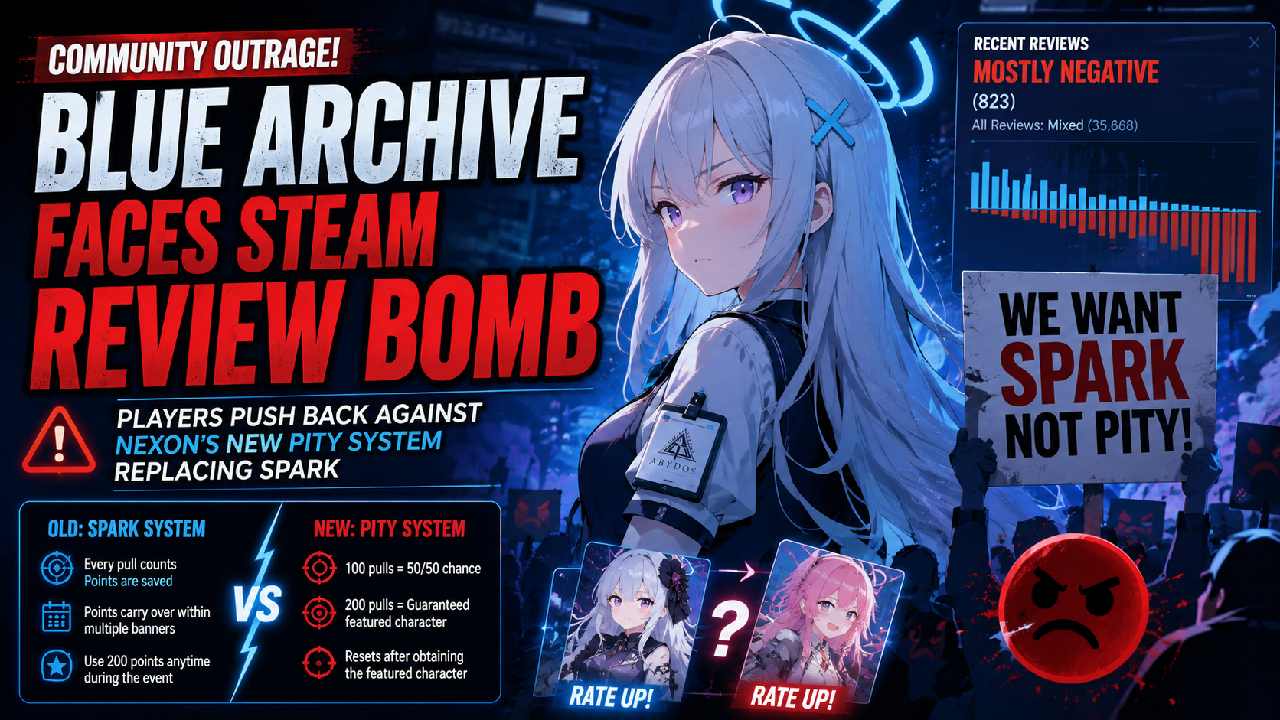
United Gaming – The Blue Archive Review Bomb story began during the game’s 5.5th Anniversary livestream. Nexon Games revealed new content, exciting characters, and several gameplay updates. However, one announcement quickly became the center of attention. The developer confirmed that the long-running Spark system would be replaced by a new pity mechanic. Many players, known as Sensei, felt shocked by the decision. They believed the old system gave them more freedom and better value for every pull. As discussions spread across social media, disappointment grew rapidly. Many longtime fans said the change removed one of Blue Archive’s biggest strengths. Instead of celebrating the anniversary, the community focused on the future of the game’s gacha system. Within hours, frustration turned into visible action as negative reviews began appearing on Steam.
Steam Reviews Turn Mostly Negative Within a Short Time
The reaction on Steam came quickly after Nexon announced the new pity system. Hundreds of players posted negative reviews to express their disappointment. The game’s Recent Reviews section soon dropped to the “Mostly Negative” rating. Reports showed that more than 800 users left negative reviews shortly after the announcement. Nearly 500 of those reviews appeared during the first day. Many reviewers explained that they still enjoyed Blue Archive’s story, soundtrack, and characters. Their criticism focused almost entirely on the new gacha system. This detail showed that players were not rejecting the game itself. Instead, they wanted Nexon to rethink a major gameplay change. The review bomb became one of the biggest community reactions Blue Archive had experienced since its launch and attracted attention from gaming fans around the world.
Read More : China’s Mazu AI Brings Faster Flood and Storm Warnings to Vulnerable Communities
Why the Spark System Became a Favorite Among Players
For more than five years, the Spark system helped Blue Archive build a loyal player base. Every summon added points toward a guaranteed featured character. Players kept those points even after receiving the banner character. During multiple-banner events, they could use saved Spark points on another featured unit in the same event. This feature rewarded planning and careful resource management. Many players saved premium currency for months because they trusted the system. Every pull felt valuable, and no progress disappeared after getting lucky. That design made Blue Archive different from many other anime gacha games. Players often praised the game for respecting both free-to-play users and paying customers. Because of that history, many Sensei viewed the Spark system as an important part of the game’s identity.
Players Question the New Pity System
The new pity system follows a model that many gacha games already use. Players receive a 50-50 chance to obtain the featured character after reaching a certain number of pulls. If they lose that chance, the game guarantees the featured character after reaching the full pity count. However, the system resets after players obtain the featured unit. This reset became the biggest reason for community criticism. Many Sensei believed they would lose the flexibility they had enjoyed with the Spark system. They argued that every pull should continue building progress instead of returning to zero. Some players also compared the mechanic with systems used in other popular gacha games. Those comparisons increased the debate because many fans hoped Blue Archive would keep its unique approach instead of following industry trends.
Read More :Realme Ends Realme UI Era and Embraces ColorOS for a Unified Future
Trust Plays a Bigger Role Than Simple Game Mechanics
This debate goes beyond mathematics or probability. It also reflects the relationship between developers and their community. Live-service games grow because players trust the systems they use every day. When those systems change, players naturally ask whether the update improves their experience. Many Sensei believed the Spark system respected their time, planning, and investment. They worried the new pity mechanic reduced those advantages. As a result, the discussion became emotional rather than technical. Community members shared detailed feedback on forums, Reddit, Discord, and social media. Most players did not ask Nexon to remove new content. Instead, they wanted the company to explain the decision more clearly or adjust the system before it became permanent. Their response showed how important player confidence remains in modern online games.
Nexon Has an Opportunity to Rebuild Community Confidence
Although the review bomb created negative headlines, it does not decide Blue Archive’s future. Many successful live-service games have recovered after listening to player feedback. Nexon now has a chance to rebuild trust through open communication and meaningful improvements. If the developer explains its goals and responds to community concerns, many players may reconsider their opinions. Sensei continue to support Blue Archive because they enjoy its memorable story, tactical battles, and charming characters. Their frustration comes from wanting the game to remain player-friendly. That difference matters. The community still cares deeply about Blue Archive and hopes future updates protect the qualities that made the game special. Whether Nexon adjusts the pity system or introduces additional improvements, its next decisions will play a major role in shaping player confidence.
About the Author