United Gaming – The gaming industry has witnessed plenty of releases that arrived with enormous promises but immediately disappointed players. Sometimes developers faced impossible deadlines, while ambitious ideas simply exceeded what their technology could deliver. Whatever the reason, players rarely stayed quiet. Broken mechanics, missing features, unstable servers, and terrible performance quickly turned excitement into frustration. Review scores collapsed, online communities erupted, and some titles appeared destined for permanent failure. Yet gaming history also proves that launch day does not always write the final chapter. A handful of studios accepted criticism, spent years rebuilding their games, and gradually regained players’ trust. These Games That Survived Backlash demonstrate how sustained development can transform a troubled product. From abandoned-looking galaxies to glitch-filled futuristic cities, five famous releases eventually turned their painful beginnings into remarkable comeback stories that still influence how players judge long-term developer support today.
No Man’s Sky Turned Broken Promises Into a Vast Universe
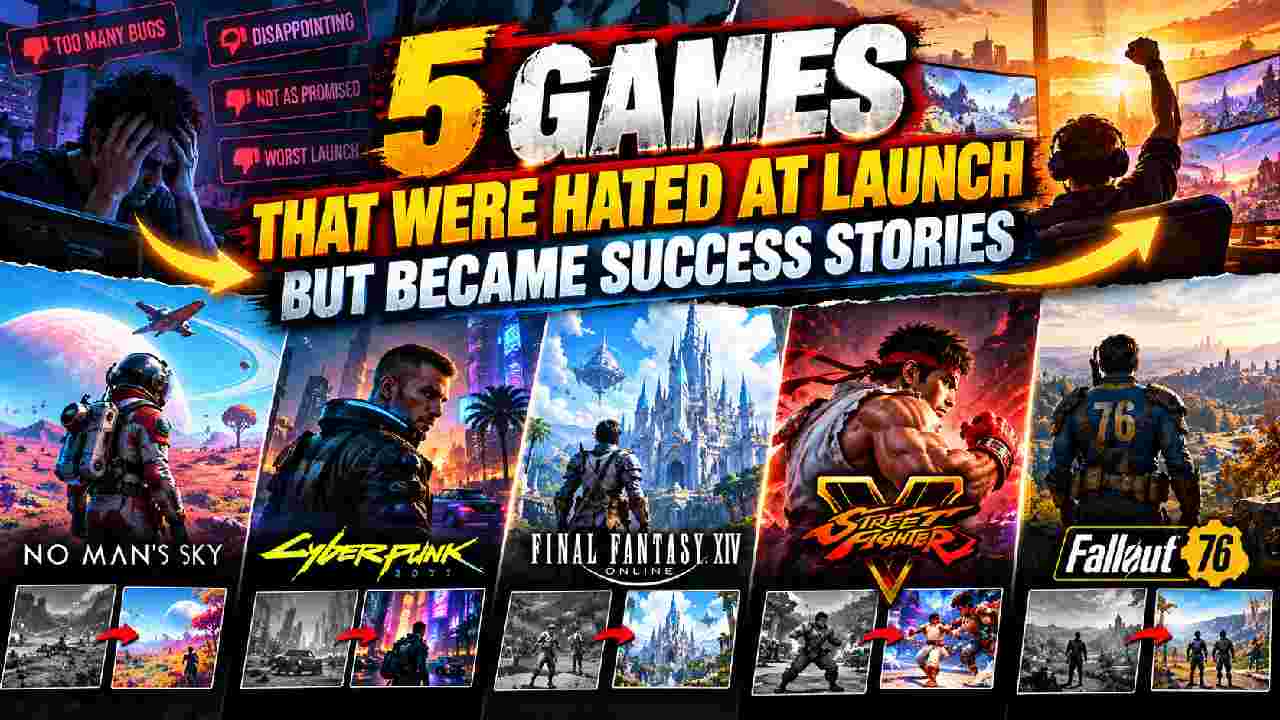
When No Man’s Sky launched in 2016, excitement surrounding its procedurally generated universe was enormous. Players expected endless exploration, diverse planets, meaningful encounters, and features that would make its galaxy feel alive. Instead, many discovered a comparatively empty experience that lacked several elements associated with its pre-release promotion. The backlash against developer Hello Games became intense, while the game’s reputation deteriorated almost overnight. Rather than abandoning the project, however, the small studio continued working. Major free updates gradually introduced multiplayer, expanded base construction, richer exploration systems, new vehicles, settlements, improved combat, and numerous quality-of-life changes. Years of consistent support completely changed the conversation surrounding the game. What once represented the dangers of excessive hype eventually became an example of determined post-launch development. Its transformation remains one of gaming’s clearest reminders that rebuilding trust takes far longer than losing it.
Read More : DDR4 Memory Makes a Comeback as PC Upgrades Face a DDR5 Price Crisis
Cyberpunk 2077 Rebuilt Night City After a Painful Launch
Few modern games carried expectations as enormous as Cyberpunk 2077. CD Projekt Red had earned considerable goodwill through The Witcher series, so players expected Night City to establish a new standard for open-world RPGs. Instead, the December 2020 launch exposed serious technical problems, particularly on PlayStation 4 and Xbox One. Bugs, unstable performance, visual glitches, and awkward systems overshadowed the game’s characters and storytelling. Sony even temporarily removed the title from the PlayStation Store. CD Projekt Red then began a lengthy repair effort through patches and major gameplay changes. Update 2.0 later redesigned important systems, including perks, police behavior, and combat-related mechanics, while the Phantom Liberty expansion demonstrated how far the experience had evolved. Over time, public sentiment shifted dramatically. Cyberpunk’s recovery became another powerful example among Games That Survived Backlash, showing how meaningful improvements can restore confidence after an exceptionally difficult release.
Final Fantasy XIV Destroyed Its World to Save Itself
The recovery of Final Fantasy XIV remains one of the most extraordinary stories in online gaming. Its original 2010 release struggled with an awkward interface, frustrating systems, performance problems, and design choices that left many players disappointed. For Square Enix, the situation threatened more than one game because Final Fantasy represented one of the company’s most valuable franchises. Naoki Yoshida eventually took leadership of the troubled project, and the team pursued a solution few major publishers would dare attempt. Instead of endlessly patching the original version, Square Enix closed it and rebuilt the experience. The shutdown itself became part of the story, culminating in a catastrophic in-game event. Final Fantasy XIV: A Realm Reborn arrived in 2013 with redesigned gameplay, infrastructure, and progression. Subsequent expansions strengthened its reputation further, transforming a disastrous MMORPG launch into a celebrated online world known for its community and emotionally ambitious storytelling.
Read More : Cheap Android Phones Found With Preinstalled Malware, Raising Serious Security Concerns
Street Fighter V Fought Its Way Back Into Favor
Street Fighter V encountered a different problem when it debuted in 2016. Its fundamental fighting mechanics had potential, but many players believed the package surrounding them felt unfinished. The absence of a traditional Arcade Mode became especially controversial, while limited single-player content and inconsistent online performance frustrated longtime fans. For a franchise with such an influential fighting-game legacy, those shortcomings were difficult to overlook. Capcom nevertheless continued developing the title rather than treating launch content as final. New fighters expanded the roster, additional modes improved the overall package, and later releases such as Arcade Edition and Champion Edition provided a much richer experience. Street Fighter V also established a substantial competitive presence during its lifespan, appearing across professional tournaments and esports events. It never erased every criticism surrounding its original release, yet its evolution demonstrated how continuous refinement could turn an incomplete-feeling launch into a mature competitive fighting game.
Fallout 76 Slowly Brought Life Back to Appalachia
Bethesda took a major gamble with Fallout 76 by transforming Fallout’s familiar post-apocalyptic formula into a multiplayer-focused experience. When the game launched in 2018, that experiment encountered immediate resistance. Players reported technical bugs, unstable servers, and an open world that many felt lacked the human presence associated with earlier Fallout adventures. The controversy surrounding its collector’s edition merchandise further damaged confidence. Predictions that the online game would quickly disappear became common. Bethesda, however, kept Appalachia alive through updates and structural changes. The Wastelanders update became a particularly important turning point because it introduced human NPCs, dialogue choices, factions, and additional story content. Later expansions and events continued adding activities for returning players. Fallout 76 ultimately developed a dedicated community and a much fuller cooperative experience. Its journey shows that even deeply criticized live-service games can improve when developers address fundamental player complaints instead of merely adding cosmetic content.
These Comebacks Changed What Players Expect After Launch
These five stories share an important lesson without excusing their troubled releases. Players who purchase a game at launch reasonably expect a functional product that reflects what developers and publishers advertised. Future patches should never become an excuse for releasing unfinished software. Still, No Man’s Sky, Cyberpunk 2077, Final Fantasy XIV, Street Fighter V, and Fallout 76 reveal what can happen when studios genuinely commit to fixing mistakes. Their recoveries required more than a few emergency patches. Developers redesigned systems, produced new content, addressed technical weaknesses, and continued listening long after the initial controversy faded. That sustained effort eventually changed how communities discussed these games. Therefore, Games That Survived Backlash offer a fascinating contrast between reputation and redemption. A disastrous launch can damage trust within days, but restoring that trust may require years of visible work. In gaming, sometimes the most memorable comeback begins with a spectacular failure.
About the Author