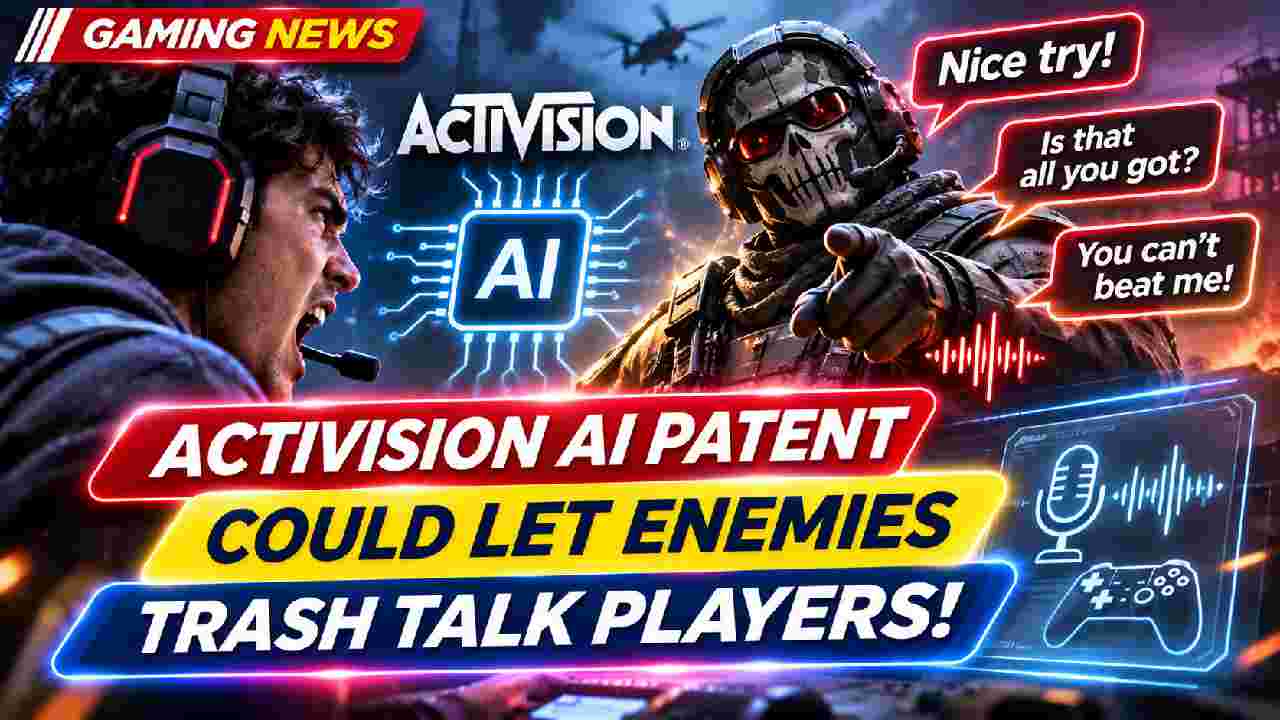
United Gaming – The gaming industry continues to explore artificial intelligence, but Activision’s latest reported patent introduces a particularly unusual possibility. Instead of simply improving enemy movements or combat strategies, the technology could allow AI-controlled characters to respond verbally to players. According to a report published on November 23, 2026, Activision filed a patent application on November 12, 2026, describing a system that uses machine learning to generate gameplay audio. The concept could eventually introduce AI opponents capable of reacting to player conversations, including competitive trash talk. For multiplayer enthusiasts, this possibility creates an interesting combination of excitement and uncertainty. After all, verbal exchanges have become a familiar part of online gaming culture. However, allowing artificial intelligence to participate introduces questions about privacy, moderation, and player comfort. Importantly, the patent remains an application rather than confirmation of an upcoming feature.
How Machine Learning Could Transform In-Game Voice Interactions
The reported patent carries the title “Methods and Systems for Applying Machine Learning to Generate Gameplay Audio.” Its central concept involves examining how players communicate during specific moments in a game. For example, the proposed system could analyze conversations surrounding eliminations, character deaths, victories, and defeats. These moments frequently produce emotional reactions, making them useful for studying natural speech patterns. According to the report, the technology could collect approximately ten seconds of audio around selected gameplay events. Machine learning systems would then identify recurring expressions, reactions, and conversational characteristics. Consequently, developers could potentially generate dialogue that reflects how real players respond to competitive situations. This approach differs from traditional enemy dialogue, which usually relies on prerecorded voice lines. Nevertheless, the patent description does not establish that Activision has already created a working system capable of reproducing these interactions in commercial games.
Read More :Google Gemini 4 Neon Arrives With Faster Reasoning and Smarter AI Performance
AI Enemies Could Respond to Trash Talk in Real Time
One of the most intriguing possibilities involves AI-controlled enemies responding directly to player speech. In traditional multiplayer games, trash talk generally occurs between human participants through voice or text communication. However, Activision’s proposed technology could extend these interactions to computer-controlled characters. Imagine defeating an opponent and hearing an AI character deliver a context-sensitive response instead of repeating a familiar prerecorded phrase. Similarly, an enemy might react differently after winning a confrontation or surviving a difficult encounter. Such interactions could make competitive environments feel more responsive and unpredictable. Furthermore, language models could potentially generate variations that reduce repetitive dialogue. However, the supplied report does not demonstrate how quickly these responses could be produced or whether they would function during live gameplay. Those technical questions remain important because delayed dialogue could disrupt immersion rather than improve the player’s experience.
Voice Chat Analysis Raises Questions About Player Privacy
Although the concept sounds entertaining, the reported patent also introduces serious privacy considerations. According to the supplied information, the proposed system could analyze player audio from gaming conversations and potentially external communication services such as Discord. This possibility creates questions about consent, data collection, and the boundaries between gaming software and private communication. Players may feel comfortable speaking with friends during a match without expecting their conversations to become training material for artificial intelligence. Therefore, any commercial implementation would need to explain what information the system collects and how developers intend to use it. Clear consent procedures, limited data retention, and appropriate security protections would be especially important. Moreover, access to third-party voice communications would depend on applicable permissions and technical integrations. The patent application alone does not establish that Activision currently records Discord conversations or collects voice data without permission.
Read More : Anthropic Unveils Claude Sheets, Challenging Excel and Google Sheets With AI
Preventing Offensive Language Could Become a Major Challenge
Training artificial intelligence on competitive gaming conversations presents another challenge: inappropriate language. Multiplayer environments can contain insults, aggressive exchanges, and expressions that developers would not want AI characters to reproduce. If a system learns directly from unfiltered conversations, it could potentially generate offensive or harmful responses. Consequently, effective content moderation would become an essential part of any implementation. According to the report, Activision’s patent describes filtering mechanisms intended to prevent the technology from learning certain inappropriate expressions. However, designing reliable filters involves more than identifying individual offensive words. Context, cultural differences, sarcasm, and player intent can influence whether a statement feels humorous or abusive. Furthermore, players have different expectations about acceptable competitive dialogue. Developers would therefore need to balance expressive interactions with community safety. Without careful moderation, a feature designed to improve immersion could instead damage the multiplayer experience.
What the Patent Could Mean for Future Call of Duty Experiences
Activision’s connection to the Call of Duty franchise naturally makes this development interesting for competitive shooter fans. The series features fast-paced encounters, intense multiplayer matches, and extensive voice communication between players. Therefore, AI-generated dialogue could theoretically complement its existing gameplay systems. Computer-controlled enemies might respond to combat situations with more varied speech, while training modes could become more conversational. Nevertheless, these possibilities remain speculative because the supplied report does not identify any confirmed Call of Duty integration. A patent application also does not guarantee that a company will develop or release the technology. Businesses frequently protect experimental concepts without introducing them into finished products. Still, the filing reflects broader interest in artificial intelligence that responds to player behavior. For developers, such systems could eventually offer new approaches to character personality, adaptive dialogue, and interactive storytelling across different gaming genres.
Activision’s AI Concept Highlights the Future of Interactive Entertainment
The reported patent illustrates how artificial intelligence could change the relationship between players and virtual characters. Traditionally, games respond to player actions through programmed animations, scripted dialogue, and predefined gameplay systems. However, machine learning could eventually introduce characters that react more naturally to spoken language and emotional situations. This development may create opportunities for memorable encounters, especially in games built around competition and unpredictable interactions. At the same time, developers must consider whether players actually want AI opponents that imitate human trash talk. Some audiences might appreciate playful exchanges, while others may prefer quieter experiences without additional verbal confrontation. Furthermore, privacy protections and reliable moderation would remain essential requirements. As of the November 23 report, Activision’s application was awaiting examination by United States patent authorities. Its eventual approval, technical development, and commercial implementation remain uncertain, leaving gamers to imagine how the concept might evolve.
About the Author